Colombo’s software firms run sprints for US clients, small Sri Lankan tea and apparel businesses answer to US buyers, and guesthouses from Galle to Ella host American travelers. They all meet the same clock problem: when the US starts work, your day is ending. Here is when the hours overlap, how a +1 number fits each kind of work, and what to check before you rely on it.
When do Colombo and US working hours overlap?
Sri Lanka is UTC+5:30 all year and does not change its clocks (IANA tz database). US Eastern time is UTC-5 in winter and UTC-4 in summer, Central is an hour behind Eastern and Pacific three hours behind, and US summer runs from the second Sunday in March to the first Sunday in November (NIST).
Here is a US working day, 9 a.m. to 5 p.m., in Colombo time:
| Your client or guest is in | US summer, Colombo time | US winter, Colombo time |
|---|---|---|
| Eastern (New York, Boston, Atlanta) | 6:30 p.m. to 2:30 a.m. | 7:30 p.m. to 3:30 a.m. |
| Central (Chicago, Dallas, Minneapolis) | 7:30 p.m. to 3:30 a.m. | 8:30 p.m. to 4:30 a.m. |
| Pacific (Los Angeles, San Francisco, Seattle) | 9:30 p.m. to 5:30 a.m. | 10:30 p.m. to 6:30 a.m. |
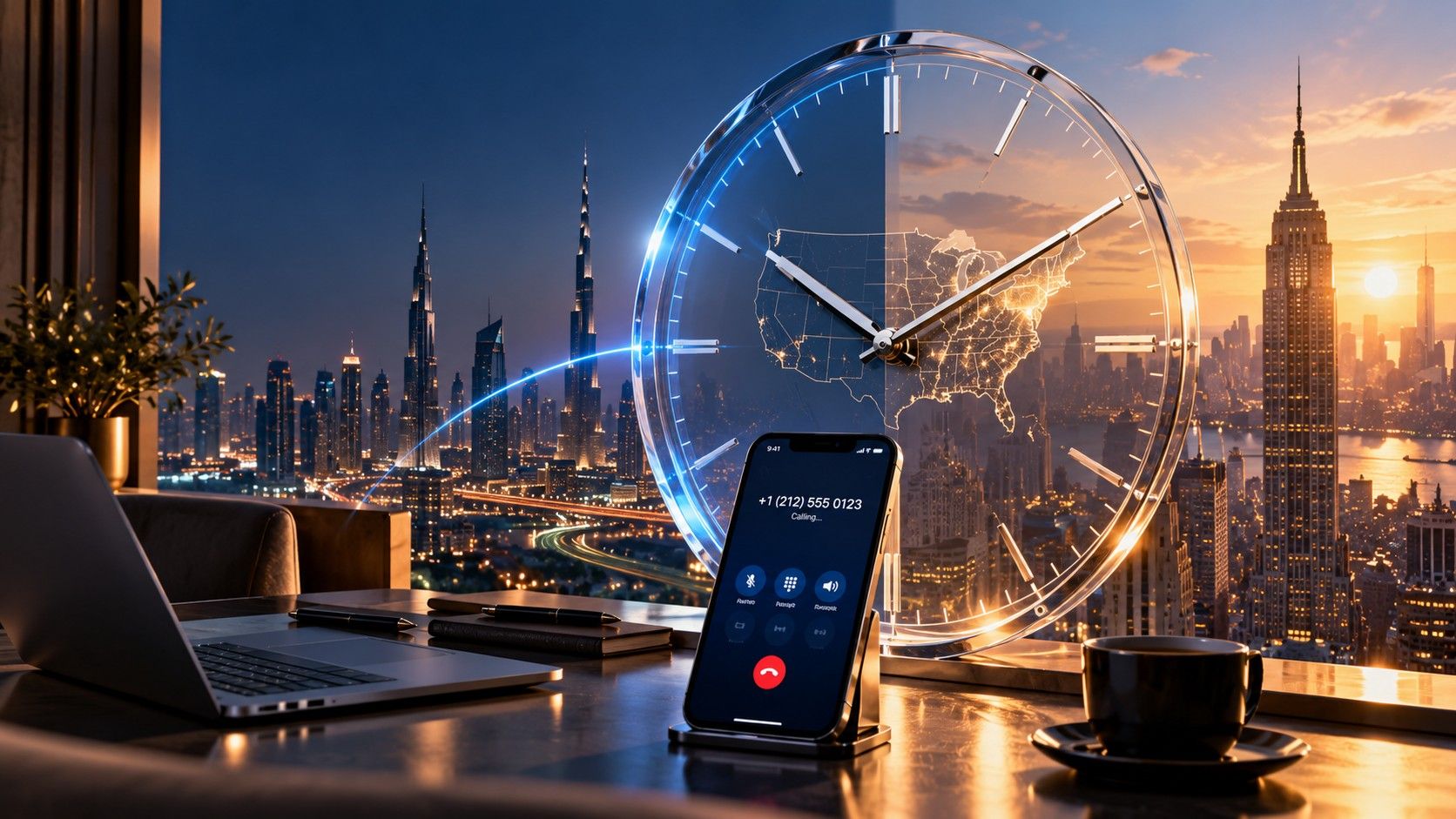
So the shared hours are your evening. For East Coast clients, about 6:30 to 9:30 p.m. Colombo time covers New York’s morning in the US summer, and 7:30 to 10:30 p.m. in the US winter. Chicago’s 9 a.m. is 7:30 or 8:30 p.m. your time, and California’s is 9:30 or 10:30 p.m., so West Coast calls are late-night calls. Many teams settle on one overlap call a day and hand the rest to email and the ticket tracker.
Your morning is the US night. What a client sends at the end of their day is waiting when you start, and your answer is there when they wake up. US clocks go back on November 1, 2026 and forward on March 14, 2027, and each time your evening window moves by an hour. The US time-zone clock shows each zone right now.
How does a US number work from Sri Lanka?
The TripoSIM US Virtual Number runs in the TripoSIM app over Wi-Fi or mobile data, on the same phone as your Sri Lankan line or on a work phone you keep for clients. On iPhone, add the TripoSIM web app to your Home Screen. On Android, install the TripoSIM app. You need an email address, a payment card and a short ID check with a photo ID and a selfie, about 2 minutes. You do not need a US address or an SSN.
Before you rely on it, one check matters. Rules on internet calling differ by country, and a call on the number is an internet call on your network. Check with your regulator or mobile operator, and keep your Sri Lankan number for calls inside Sri Lanka.
Texts work differently. A text from a US sender reaches your number in the US and appears in the app over your connection, and verification codes from apps arrive the same way.
Which setup fits your work?
IT and outsourcing project managers. The person who owns the client relationship, a project manager, delivery lead or account lead, is the right person for a +1 number. The client’s product owner can ring you with a quick question instead of booking a meeting, and you can call back from the app. A support desk where several engineers answer one line is a different thing: the number is one person’s line for personal and small-business use, and call centers are not allowed. If four managers each run a US account, each gets their own number, app and ID check. US numbers for remote teams covers team setups.
Tea and apparel exporters. A small tea exporter selling to US shops, or a small apparel maker sewing for US labels, takes calls about samples, prices and ship dates. A +1 number on your quotes and email signature makes those ordinary US calls for the buyer. If you run two lines, say packaged tea for retailers and bulk tea for distributors, one person can hold several numbers, each with its own plan and voicemail greeting. The importers and exporters page covers buyers, suppliers and freight forwarders.
Tour operators and guesthouses. American travelers planning a hill-country tour or a stay on the south coast often want to talk first: airport transfers, how long the drives take, whether the scenic train is worth a day. A +1 number on your website lets them call you like a US business. Their evening calls arrive in your small hours, so the greeting should say when you call back, in Eastern or Pacific time. Once guests land, switch to your Sri Lankan line or WhatsApp. The tour operators page covers busy-season inquiries.
How many minutes does a typical month use?
Take Nuwan, a made-up example: a project manager at a software firm in Colombo whose client is in Chicago. He has two standing 45-minute calls a week with the client, at 9 a.m. Central, which is 7:30 p.m. his time in the US summer. Each outgoing call is rounded up to the next full minute; unanswered calls are free. So a call that runs 45 minutes and 10 seconds counts as 46.
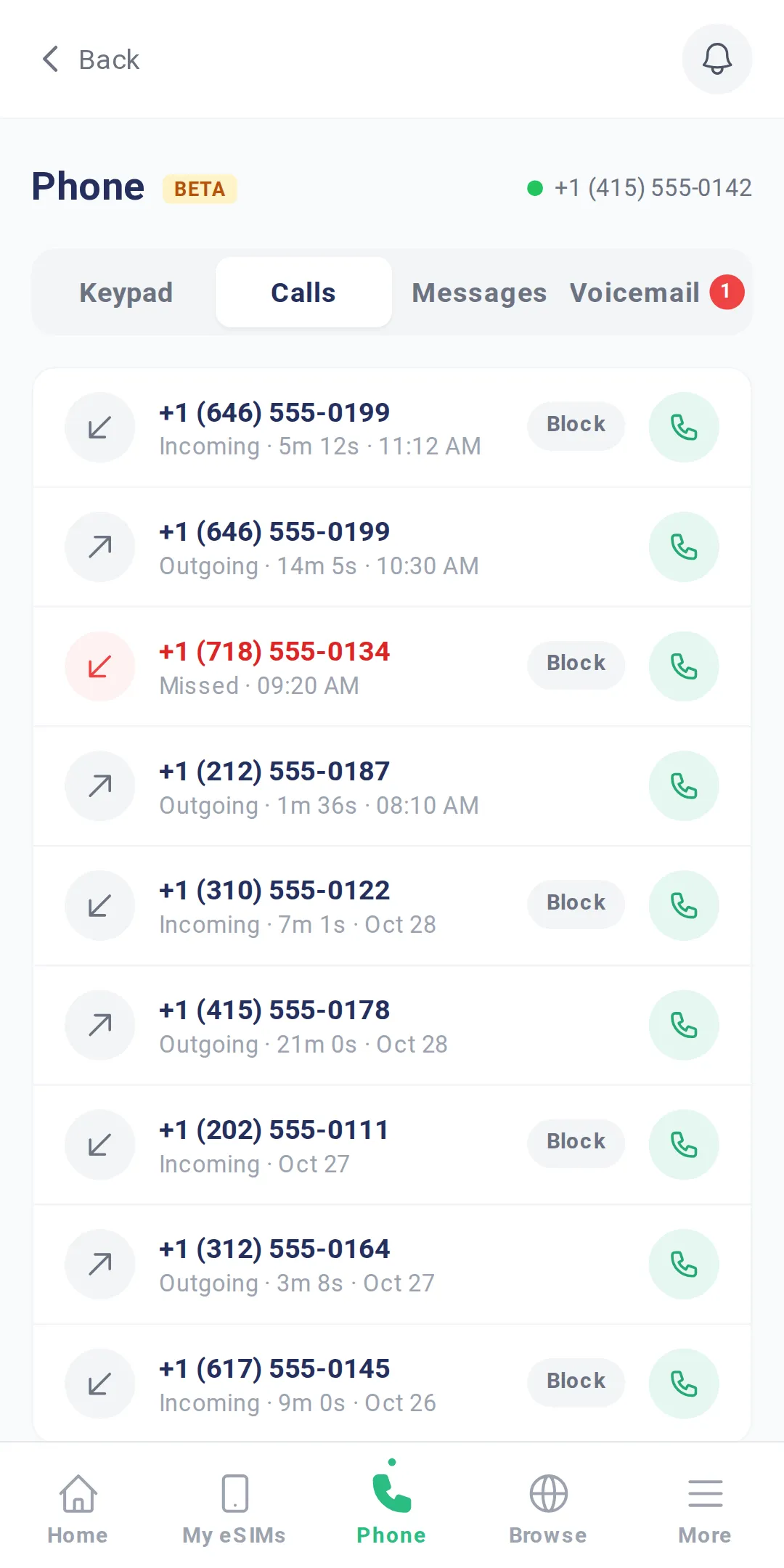
If Nuwan dials both calls, that is 90 minutes a week, about 390 minutes a month, past the 300 minutes a month to the US and Canada. He would need one extra pack of 100 minutes, at $5, each month. Instead he asks the client to dial the Thursday call to his +1 number. Now he uses about 195 outgoing minutes a month, and the other 195 come from the separate fair use of 300 minutes a month for calls in. Both sit inside the plan, with no pack. The cost calculator and the minutes guide work out your own month.
What should your contact page and voicemail say?
Say where you are and when you answer, in your client’s time zone:
US line: +1 (your number). (Name), project manager at (company), Colombo, Sri Lanka. I take calls Monday to Thursday, 9 to 11 a.m. Central. Leave a voicemail at any time and I will call back in my next call window, or email (your address).
Write “call or email”, not “call or text”. A US area code makes you easy to call; it does not give you a US office, so give your real city. Voicemail messages can be up to 2 minutes, up to 30 a month, kept 30 days. The voicemail guide and the business contact checklist have more.
What can’t the number do?
- No sending texts. It receives texts only. For chat, clients can use email, your team’s chat tool or WhatsApp, which you can set up on the same US number.
- No calls out beyond the US and Canada. Use your Sri Lankan line for Sri Lankan numbers.
- No 911. It cannot call 911 or any emergency service, so keep your Sri Lankan number for emergencies.
- No internet, no ring. If your connection drops, callers reach voicemail. Give clients email as the backup.
The bottom line
From Sri Lanka, plan US calls in your evening: about 6:30 to 9:30 p.m. for New York in the US summer, an hour later in the US winter, and later still for California. Give each person who talks to US clients or guests their own +1 number, put your hours in the caller’s time zone, and decide who dials the standing calls so the minutes fit the plan. Check the rules on internet calling first, then test calls with the ten-check reliability test. For other countries, see US phone numbers by country. The plans page has both plans: $100 a year or $12.99 a month.