

Peru is one of the few countries outside North America that spends part of the year on New York time. From early November to mid-March, 9 a.m. in New York is 9 a.m. in Lima, and the rest of the year you are only an hour behind. For a tour company in Cusco answering Americans who are planning Machu Picchu, a coffee or alpaca-knitwear exporter in Lima talking to US buyers, or a bilingual virtual assistant working for a US small business, US calls happen in an ordinary working day. Here is how the hours line up, how a +1 number fits each kind of work, and what to check first.
When do Peruvian and US working hours overlap?
Peru has a single time zone, UTC-5, and does not use daylight saving time (IANA tz database). US Eastern time is UTC-5 in winter and UTC-4 in summer, Central is an hour behind Eastern and Pacific three hours behind, and US summer runs from the second Sunday in March to the first Sunday in November (NIST).
Here is a US working day, 9 a.m. to 5 p.m., in Lima time:
| Your US contact is in | US summer, Lima time | US winter, Lima time |
|---|---|---|
| Eastern (New York, Boston, Miami) | 8 a.m. to 4 p.m. | 9 a.m. to 5 p.m. |
| Central (Chicago, Houston, Dallas) | 9 a.m. to 5 p.m. | 10 a.m. to 6 p.m. |
| Pacific (Los Angeles, San Francisco, Seattle) | 11 a.m. to 7 p.m. | noon to 8 p.m. |
In the US winter your day and New York’s are the same hours. In the US summer the East Coast is an hour ahead, so a buyer in Miami starts calling at 8 a.m. your time and stops at 4 p.m., and you are on the same clock as Chicago and Houston. The West Coast is your late morning and afternoon all year.
That summer shift matters most to tour operators. Many travelers choose the Andes from about May to September, which falls in the US summer, so in your busiest months New York is an hour ahead of you. US clocks go back on November 1, 2026 and forward on March 14, 2027. Calendar invites from US clients move by an hour on your clock on those dates, even though Peru’s clock does not change. The US time-zone clock shows each zone right now.
How does a US number work from Peru?
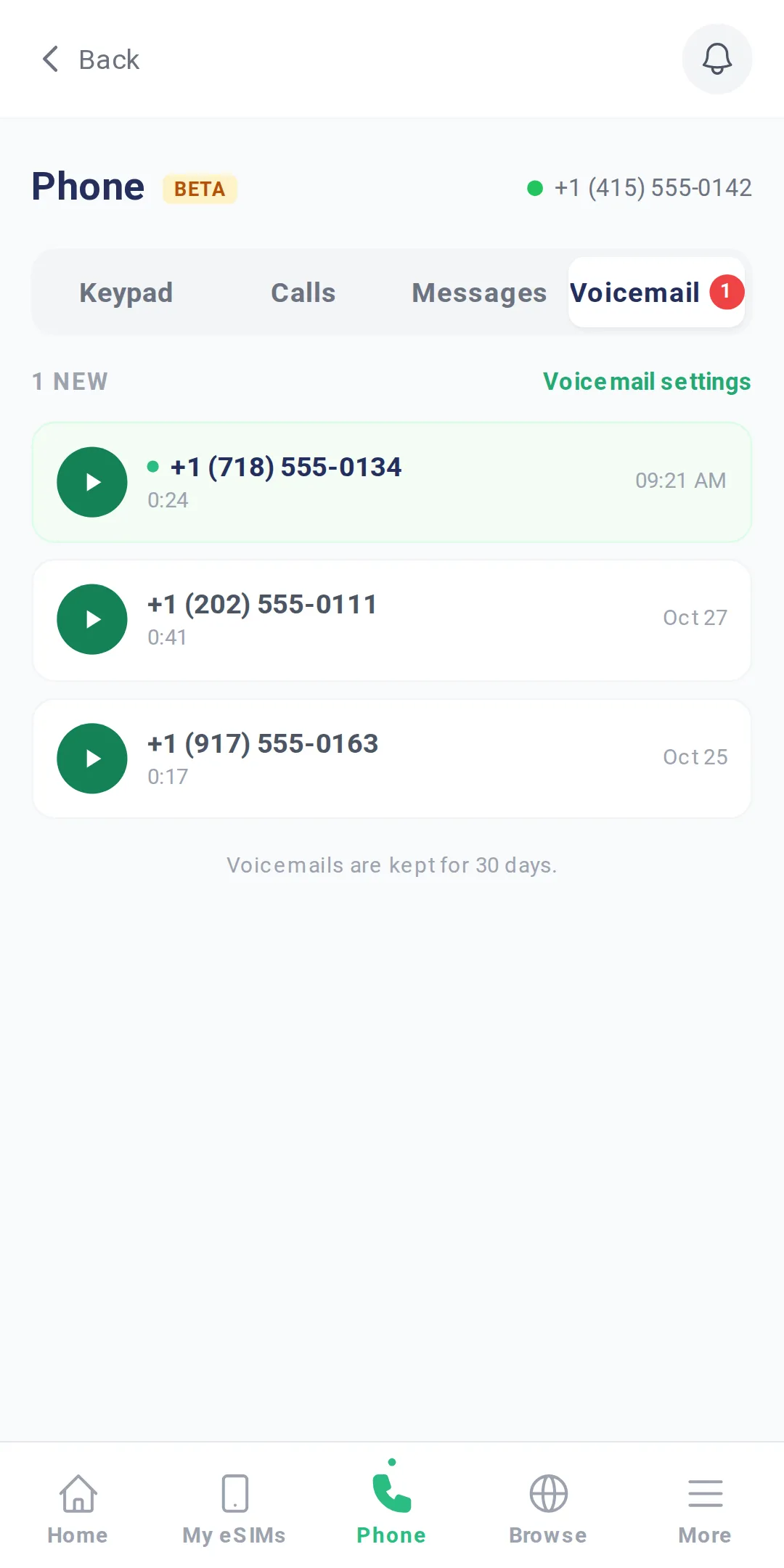
The TripoSIM US Virtual Number runs in the TripoSIM app over Wi-Fi or mobile data. On iPhone, add the TripoSIM web app to your Home Screen. On Android, install the TripoSIM app. You need an email address, a payment card and a short ID check with a photo ID and a selfie, about 2 minutes. You do not need a US address, an SSN or a US company.
Rules on internet calling differ by country, and on your network a call on the number is an internet call. Check with your regulator or mobile operator before you rely on calls, and keep your Peruvian number for calls inside Peru.
Texts from US senders reach your number in the US and show up in the app over your connection, and verification codes from apps arrive the same way. WhatsApp Business sent its code to a TripoSIM number in TripoSIM’s tests on October 18, 2026.
Which setup fits your work?
Tour operators and guesthouses. Americans planning a trek or a week in the Sacred Valley often want to talk before they pay: about the altitude, the train, a child’s age or a dietary need. Put the +1 number on your website, booking emails and pre-trip email, with your hours in US Eastern time. When your guides are on the trail or you are in a valley with no signal, voicemail takes the call and you ring back in the evening. The tour operators page covers where to list the number and busy-season limits.
Exporters. A US importer or a freight forwarder in Miami picks up the phone more readily for a +1 number on your quote, pro forma invoice or trade-show card. With your hours this close to theirs, you can call a buyer at 9 a.m. their time without staying late. If you sell more than one product line, one person can hold several numbers, each with its own plan. See one person, several US numbers and how a US number helps you win US clients.
Bilingual virtual assistants. If you work from Lima for a US small business, you may book appointments, follow up with suppliers or return calls for your client, in English and Spanish. With a +1 number, the people you call see a US number, and your hours already match US business hours. It is your line, for personal and small-business use; a team that answers one shared line needs something else, and call centers are not allowed. The virtual assistants page and US numbers for remote teams explain the difference.
How many minutes does a tour company use?
Take Rosa, a made-up example: she runs a small trekking company in Cusco, and most of her guests are American. In the busy months, about 45 travelers a month call her before they book, for around 6 minutes each: 270 minutes. Those are calls to her, so they come from the separate fair use of 300 minutes a month and do not touch her outgoing minutes.
She calls out too: about 30 call-backs to voicemails at 5 minutes each, and a 20-minute weekly call with a travel agent in Denver who sends her groups. That is 150 plus 87, or about 237 minutes a month, inside the 300 minutes a month to the US and Canada. Each outgoing call is rounded up to the next full minute; unanswered calls are free.
In the quiet months she makes about half as many calls. If a busy month runs over, extra outgoing minutes cost $5 per 100, and above the incoming fair use, callers reach voicemail until the next month. The cost calculator works out your own month, and the monthly minutes guide has more examples.
What should your contact page and voicemail say?
Say where you are and when you answer, in US time:
US line for travelers: +1 (your number). (Company), small-group treks from Cusco, Peru. We answer Monday to Saturday, 9 a.m. to 5 p.m. Eastern. If we are out on a trek, leave a voicemail and we will call you back the same day. For bookings in writing, email (your address).
Record the greeting in English and keep it short; travelers mostly want to know you will call back. Write “call or email”, not “call or text”, and give your real city: a US area code makes you easy to call, but it does not give you a US office. Voicemail messages can be up to 2 minutes, up to 30 a month, kept 30 days. The voicemail greeting scripts and the business contact checklist have more.
What can’t the number do?
- No sending texts. It receives texts only. Travelers and buyers can email you or use WhatsApp Business, which you can set up on the same US number. See WhatsApp Business with a US number.
- No calls out beyond the US and Canada. Use your Peruvian line for Peruvian numbers, including your local suppliers.
- No 911. It cannot call 911 or any emergency service, so keep your Peruvian number for emergencies.
- No signal, no ring. On a trek or anywhere without data, callers reach voicemail. Check messages when you are back online.
The bottom line
From Peru, US calls fit your normal day: New York from 8 or 9 a.m. Lima time, depending on the US season, Chicago on your clock in the US summer, and the West Coast from late morning. Give American travelers, buyers and clients a +1 number with your hours in Eastern time, answer live in the shared hours, and let voicemail cover the days on the trail. Check the rules on internet calling first, then test calls with the ten-check reliability test. For other countries, see US phone numbers by country. The plans page has both plans: $100 a year or $12.99 a month.