A US number for musicians and performers with US bookings
US venues, studios and event clients call a familiar +1 number to book you. You answer in an app, or the voicemail takes the details.
Short answer
Musicians, DJs, voice-over artists and performers outside the US use a US virtual number so US venues, studios and event clients can call a familiar +1 number to book them. The TripoSIM number rings in an app, takes voicemail and includes 300 minutes a month of calls to the US and Canada. It receives texts but cannot send them.
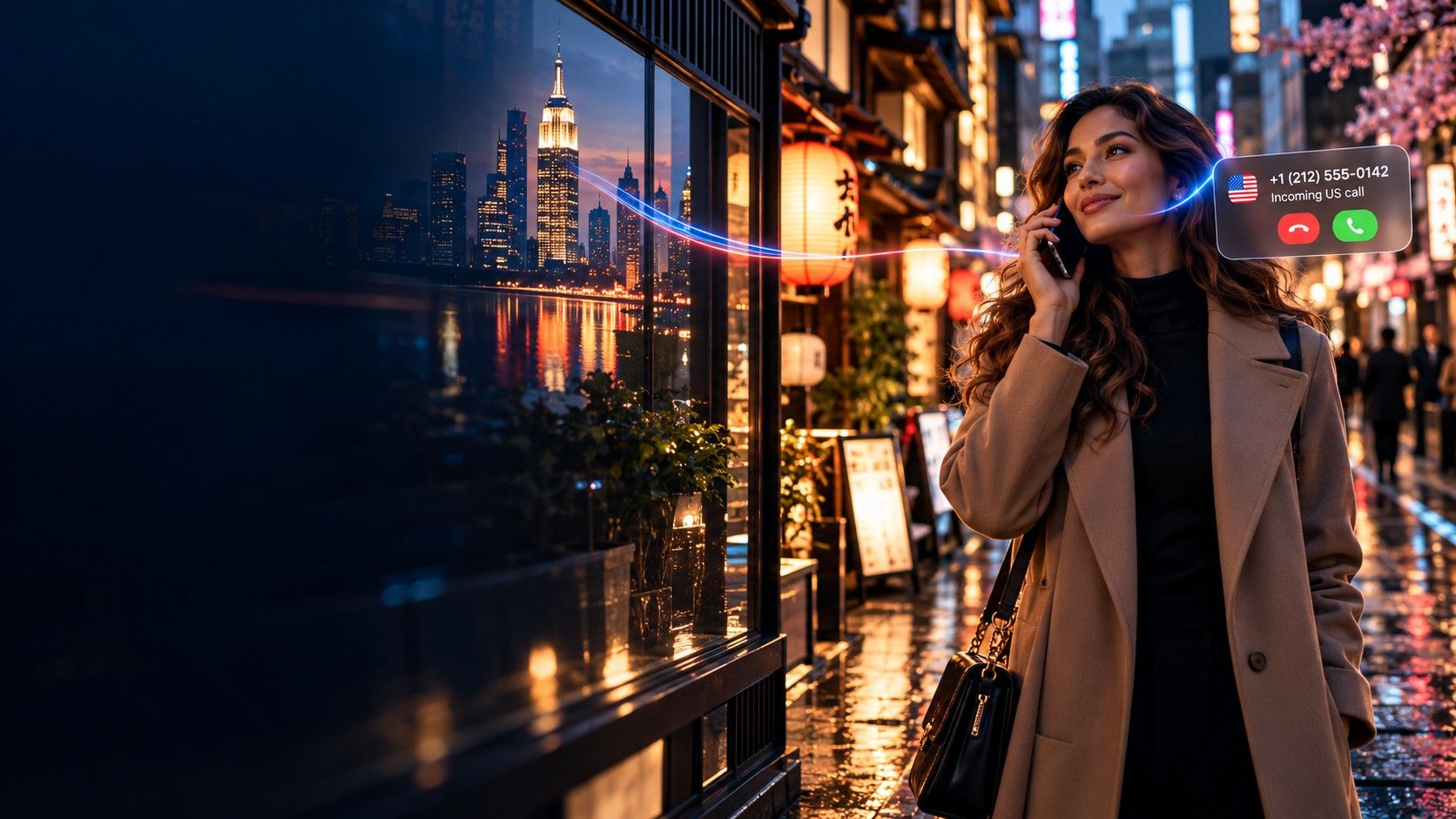
Illustration. The phone screen is drawn, not the TripoSIM app.
Why give US bookers a US number?
Bookings often start with an email, a message or a form. Then someone wants to talk: a venue booker checking your date, a couple who want a DJ for their wedding, or a studio producer with a voice-over job for tomorrow. For them a +1 number is an ordinary call, and it fits on your press kit, website and rate sheet next to your email.
The TripoSIM US Virtual Number runs in an app on your phone over Wi-Fi or mobile data, next to your local SIM. Calls ring like a normal call. When you are on stage, in the booth or asleep after a late set, callers leave a voicemail. Be clear about where you are: "based in Lisbon, touring the US in spring" is honest, and a +1 number does not give you a US address. This page covers the phone line only.
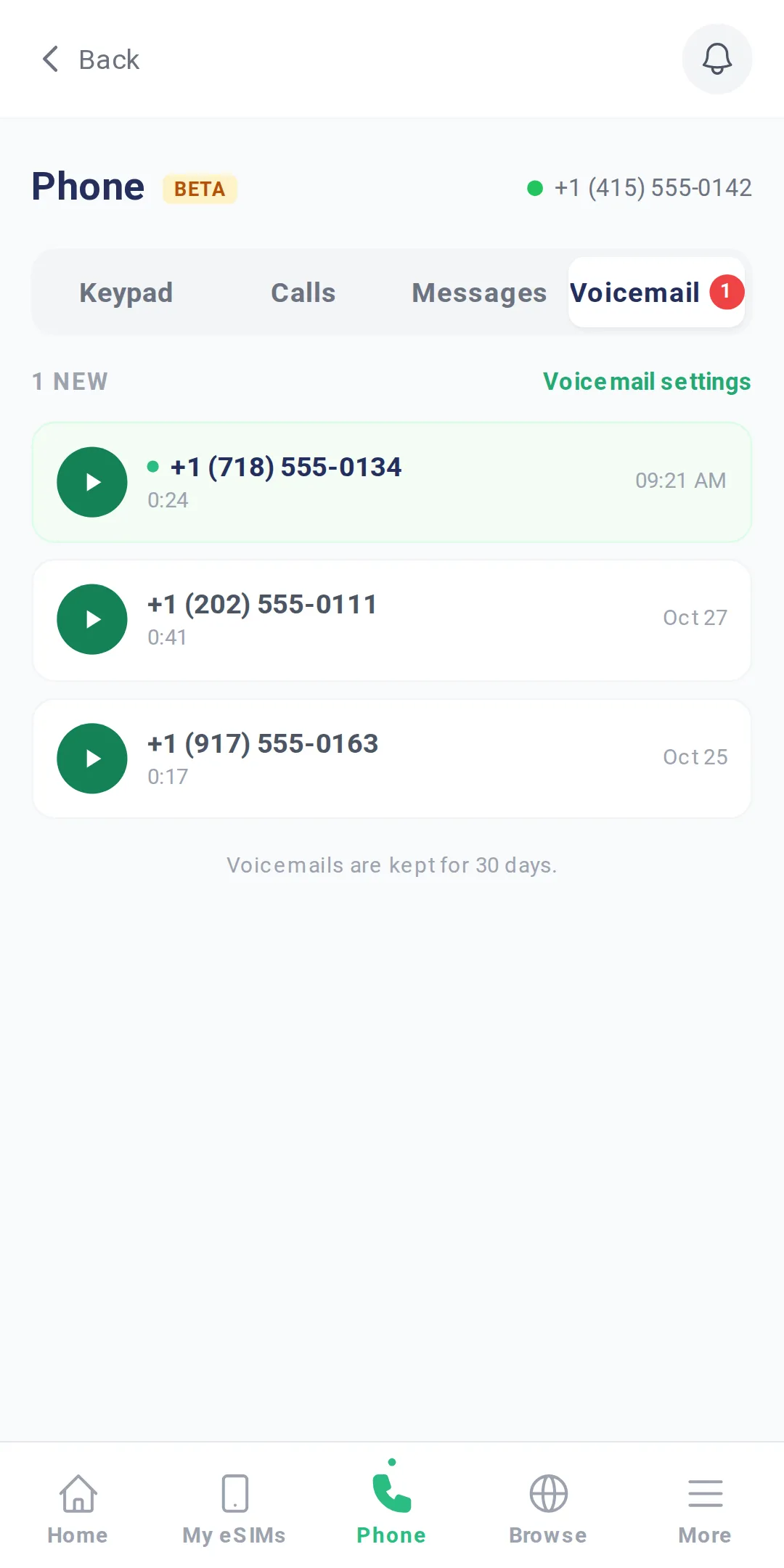
Booking messages, ready to play. Real app screen, example number.
Who calls to book you?
A few kinds of callers in a typical booking season. This is a made-up example, not a rule for every act:
Who calls a performer with US bookings, and what works
Caller
Typical reason
What works
Venue or club booker
Typical reasonA date, the set length, the fee or the technical rider
What worksAnswer in your call hours, then send the offer back by email so the terms are in writing
Wedding or private event client
Typical reasonWhether you are free on their date, and what is included
What worksA short call, then a written quote
Studio or production company
Typical reasonA voice-over or session job, often at short notice
What worksAnswer or call back the same day; the session itself runs on the studio's own link
Promoter or tour booker
Typical reasonRouting, dates in several cities and advance details
What worksA scheduled call, then the itinerary by email
Confirm every booking in writing, with the date, the times, the fee and who pays for travel, before you book a flight.
What should your booking voicemail say?
Your greeting is a booking script: who you are, what you do and what to leave. For example:
"You have reached [your name or act name], [DJ / jazz trio / voice-over] based in [city]. For bookings, leave your name, the date, the city and venue or kind of event, and a good time to call. I call back within one working day, in US hours. Studios can also email scripts and session details to [your address]."
Messages can be up to 2 minutes, up to 30 a month, kept 30 days. In a busy booking season that monthly limit can matter, so point full details to email or your booking form in the greeting. The voicemail guide has setup steps, and the greeting scripts have more wording.
When do bookers call?
Mostly in US business hours, which for most performers is the quiet part of the day. New York's 9 a.m. falls at about:
London: 2 p.m. most of the year.
Central Europe: 3 p.m. most of the year.
Lagos: 2 p.m. in the US summer, 3 p.m. in the US winter.
Los Angeles is three hours behind New York, so West Coast studios call later in your day. US clocks change on the second Sunday in March and the first Sunday in November, according to NIST, and Europe changes on different dates, so for a few weeks each spring and autumn the gap shrinks by an hour. The US time-zone clock shows the time in each zone right now. After a late show, let voicemail take the morning calls and call back in your window.
What about voice-over and studio sessions?
Auditions and directed sessions run on the link or recording platform the studio gives you. The US number is for the calls around them: the booking, a change of time and the call-back after a take. Calls you place to US studios use your minutes; calls they make to you are included up to the fair use.
Are the minutes enough in touring season?
Calls bookers make to you are included up to a fair use of 300 minutes a month. Only calls you place use your 300 minutes to the US and Canada. Each outgoing call is rounded up to the next full minute; unanswered calls are free. Three example months, worked out as if every month looked the same:
300 min included
Quiet monthsabout 87 min, within the plan
Booking a US tourabout 260 min, within the plan
Tour plus advance callsabout 390 min: 11 extra packs, +$55 a year
Within the included minutesExtra minutes, $5 per 100
Calls you place to US venues, studios and event clients, by season
Example
Calls out to the US and Canada
Extra minutes
One year on the yearly plan
Quiet months
Calls out to the US and Canada2 booking calls a week, 10 minutes each: about 87 minutes a month
Extra minutesNone: within the included minutes
One year on the yearly plan$100
Booking a US tour
Calls out to the US and Canada6 calls a week, 10 minutes each: about 260 minutes a month
Extra minutesNone: within the included minutes
One year on the yearly plan$100
Tour plus advance calls
Calls out to the US and Canadathe same, plus 3 advance calls a week of 10 minutes: about 390 minutes a month
Extra minutes11 × $5 = $55 a year
One year on the yearly plan$155
Incoming calls do not use your minutes (fair use 300 minutes a month). Each plan includes 300 minutes a month out; extra minutes are $5 per 100, and unused extra minutes carry over to the next month, so the year counts the packs for all 12 months together. Prices before tax.
Advance calls are the ones to each venue before the show, about load-in, sound check and set times. Booking a tour takes a few months, not twelve. Say 3 months look like the last row and the rest of the year like the quiet months. Top-up minutes carry over, so you need 3 extra packs of 100 minutes for the whole stretch, and the year comes to $115 on the yearly plan. The monthly plan is $12.99 with the same minutes. Try your own numbers in the cost calculator.
What about texts and app codes?
The number receives texts from US and Canadian senders, so a booker's "are you free on the 14th?" reaches the app. Sending texts is not included, so answer with a call or an email, and write "call or email" in your press kit, not "call or text".
The number also receives verification codes (OTP SMS) from apps. TripoSIM tested Instagram, TikTok, Facebook, Google and Discord on October 3, 2026, so codes for your social accounts can come to it; you sign in to YouTube with your Google Account, so its code comes from Google. For getting paid, TripoSIM also tested PayPal, Payoneer, Wise and Stripe, and for voice-over and session work sold online, Fiverr and Upwork.
Many promoters and venues plan over WhatsApp. The number receives the WhatsApp verification code, and TripoSIM tested WhatsApp Business on October 18, 2026, so you can set up WhatsApp Business on the same +1 number bookers call. See WhatsApp Business on a US number.
Do you perform under more than one name?
The same person can have as many TripoSIM US numbers as they like on one account, each with its own plan, minutes and voicemail greeting. A DJ who also runs a voice-over business can give each its own number, so a club booker and a studio producer each hear the right name.
Each number is one person's line in their own app. In a band, the person who takes bookings has the number. If a manager takes calls too, give them their own number rather than sharing one.
When is another option better?
Bookers expect text replies from the number: the TripoSIM number receives texts only. Use WhatsApp Business on the number, or a provider with two-way texting; see providers compared.
A booking agency team shares one line: the number is for personal and small-business use, and call centers are not allowed. Shared lines need a business phone system built for teams.
Most of your bookers are outside the US and Canada: calls out go to US and Canadian numbers only. Anyone can still call your number.
Signal is weak at the venues you play: calls need Wi-Fi or mobile data. Run the ten-check test first, and let voicemail take calls on show days.
Get your US number
Two plans with the same number, minutes and app.
Best value, save 36%
Yearly plan
$100per year
About $8.33 a month, paid once a year
300 minutes a month to the US and Canada
Incoming calls, voicemail and texts from US senders
Prices in US dollars as published by TripoSIM. Payments are not refunded, except a full refund if your ID check fails or your number is not delivered within 72 hours, or where local law requires. Checkout continues on TripoSIM. Right after payment you complete an ID check with a selfie, then choose from the numbers available.