
Türkiye sells a great deal to the US, from towels and denim to furniture and machine parts, and many clinics and agencies in Istanbul hear from Americans every week. The time difference is manageable: the US morning lands in your late afternoon. What gets in the way is that some US buyers and patients will not dial a +90 number. Here is how the hours line up, what a US number looks like for exporters, clinics and agencies, and what to check before you rely on it.
When do Turkish and US working hours overlap?
Türkiye has been on UTC+3 all year since 2016 and no longer changes its clocks (IANA tz database). US Eastern time is UTC-5 in winter and UTC-4 in summer, Central is an hour behind Eastern and Pacific three hours behind, and US summer runs from the second Sunday in March to the first Sunday in November (NIST).
Here is a US working day, 9 a.m. to 5 p.m., in Istanbul time:
| Your US contact is in | US summer, Istanbul time | US winter, Istanbul time |
|---|---|---|
| Eastern (New York, New Jersey, Atlanta) | 4 p.m. to midnight | 5 p.m. to 1 a.m. |
| Central (Chicago, Dallas, Houston) | 5 p.m. to 1 a.m. | 6 p.m. to 2 a.m. |
| Pacific (Los Angeles, San Francisco, Seattle) | 7 p.m. to 3 a.m. | 8 p.m. to 4 a.m. |
So the overlap is your late afternoon. A block from 4 to 7 p.m. Istanbul time covers New York’s morning in the US summer, and 5 to 8 p.m. covers it in the US winter. An office that closes at 6 p.m. still catches the first one or two hours of the East Coast day; West Coast buyers need an evening slot, 7 p.m. or later.
If you remember a seven-hour gap with New York all year, that was before 2016. Today it is seven hours in the US summer and eight in the US winter. US clocks go back on November 1, 2026 and forward on March 14, 2027. The US time-zone clock shows each zone right now.
How does a US number work from Türkiye?
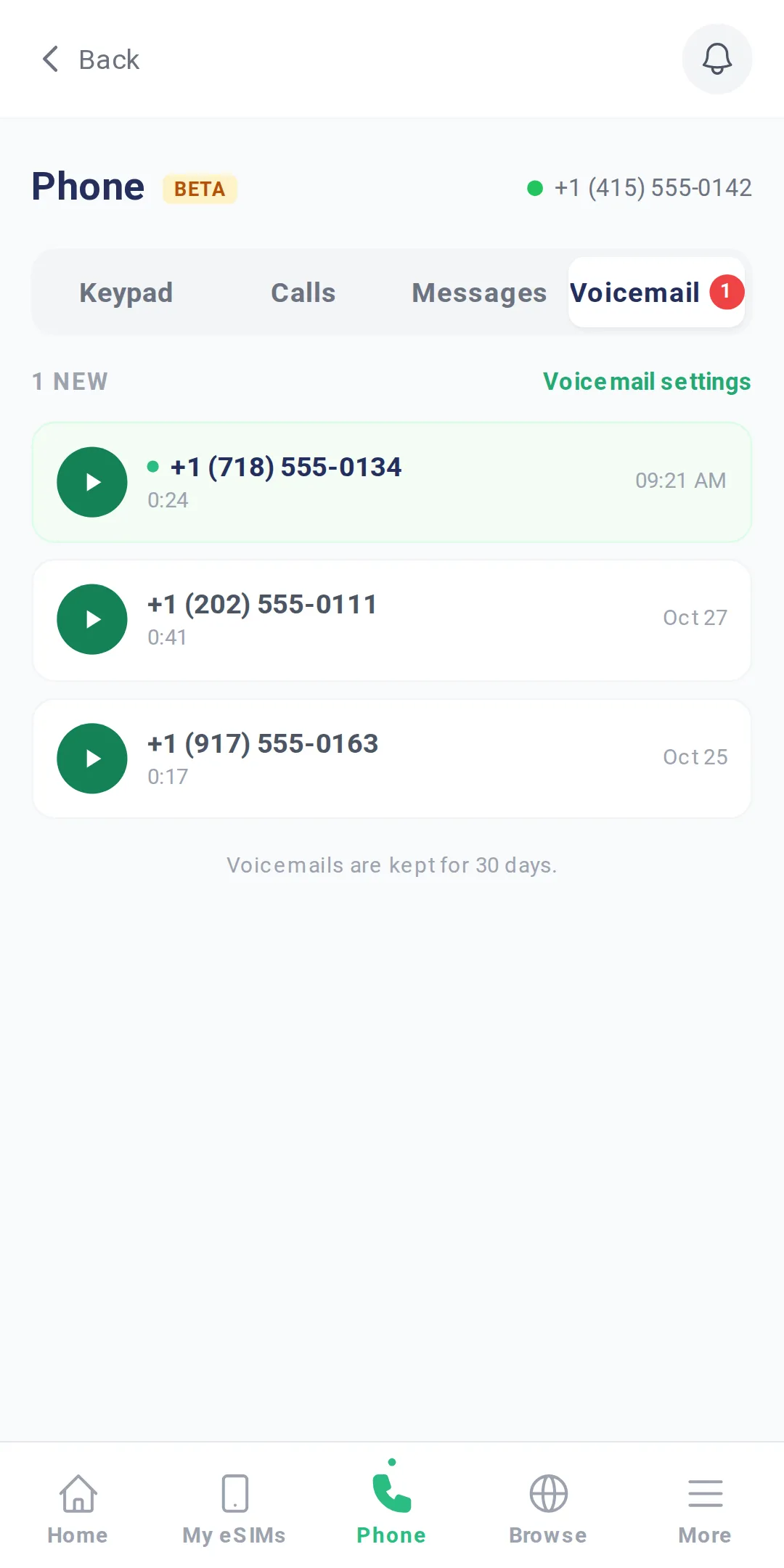
The TripoSIM US Virtual Number runs in the TripoSIM app over Wi-Fi or mobile data, so the same number goes with you to a US trade show and back. On iPhone, add the TripoSIM web app to your Home Screen. On Android, install the TripoSIM app. You need an email address, a payment card and a short ID check with a photo ID and a selfie, about 2 minutes. You do not need a US address or an SSN.
Rules on internet calling differ by country, and on your network a call on the number is an internet call. Check with your regulator or mobile operator before you rely on calls, and keep your Turkish number for calls inside Türkiye.
Texts from US senders reach your number in the US and show up in the app over your connection. Verification codes from apps arrive the same way.
Which setup fits your work?
Exporters and manufacturers. An export manager at a textile mill in Denizli or a furniture maker in İnegöl talks to US retail buyers, importers and freight forwarders. A +1 number on your price list, website and email signature makes each of those an ordinary US call, and voicemail takes the ones that come in after you have gone home. After a US trade show, put the number in your follow-up emails so new leads can call. The importers and exporters page covers calls from buyers, forwarders and customs brokers.
Clinics. Dental and other clinics in Istanbul and Antalya that see patients from the US get inquiry calls from people who want to talk before they book travel. A +1 number on your English-language site turns that first call into a US call. The coordinator calls back in US hours, which is your late afternoon and evening, and voicemail covers the night. This covers the phone line only, not treatment. A busy inquiry line can reach the limits: calls to the number are included up to a fair use of 300 minutes a month, and voicemail holds up to 30 messages a month. Ask callers to email as well, and give a second coordinator their own number. The clinics page has setups and minutes.
Agencies. A digital, design or software agency in Istanbul with US accounts can give each account manager a +1 number in their own app. Clients call the person who knows their work, and each greeting names the right person. The agencies page has the options.
How do two export lines work in practice?
Take Murat, a made-up example: the export manager at a home-textile maker in Denizli. He sells towels to US retail buyers and, under a second brand, bathrobes to US hotels. He keeps two US numbers on one account, each with its own plan, so each brand has its own greeting and its callers hear the right name.
On the retail line he has two 25-minute buyer calls a week: 50 minutes a week, or about 217 minutes a month. On the hotel line he makes about 15 call-backs a month of 6 minutes: 90 minutes. Each number has its own 300 minutes a month to the US and Canada, so both lines fit with room to spare. Each outgoing call is rounded up to the next full minute; unanswered calls are free.
On one number, the same calls would come to about 307 minutes, just over, and one pack of 100 minutes for $5 would cover it. For minutes alone, the extra pack costs less than a second plan; the second number is worth it for the separate greeting and voicemail. Compare both in the cost calculator, and read one person, several US numbers.
What should your contact page and voicemail say?
Say who you are, where you are and when you call back, in your buyer’s time zone:
US line: +1 (your number). (Name), export sales, (company), Denizli, Türkiye. I return calls Monday to Friday, 9 a.m. to noon Eastern. Leave your name, company and order or quote number, or email (your address).
Write “call or email”, not “call or text”. A US area code makes you easy to call; it does not give you a US office, so give your real city. Voicemail messages can be up to 2 minutes, up to 30 a month, kept 30 days. The voicemail guide and the business contact checklist have more.
What can’t the number do?
- No sending texts. It receives texts only. For written questions, buyers and patients can use email or WhatsApp, which you can set up on the same US number.
- No calls out beyond the US and Canada. Use your Turkish line for Turkish numbers.
- No 911. It cannot call 911 or any emergency service, so keep your Turkish number for emergencies.
- Not a call center line. It is one person’s line for personal and small-business use, and call centers are not allowed.
The bottom line
From Türkiye, plan US calls for your late afternoon: about 4 to 7 p.m. for New York in the US summer, 5 to 8 p.m. in the US winter, and the evening for the West Coast. Give buyers, patients and clients a +1 number with your hours in Eastern time, use one number per person or brand, and let voicemail cover the night. Check the rules on internet calling first, then test calls with the ten-check reliability test. The plans page has both plans: $100 a year or $12.99 a month.