
WhatsApp is how much of the world talks to clients. If your business runs on it, it is tempting to put a WhatsApp link on your site and leave it there. With US clients, that often leaves a gap. Here is why many of them still want a phone number, and how to give them one without giving up WhatsApp.
How do US clients use the phone?
Plenty of Americans use WhatsApp, but many use their phone’s built-in calling and messages for everyday contact instead. For them, “get in touch” means one of three things: call the number, leave a voicemail, or send an email.
That shapes what they expect from you:
- A number they can dial from their phone or desk line without installing anything.
- Voicemail when you miss them. Many callers leave a message and expect a call back.
- A call back in their hours. “I’ll call you tomorrow morning” means their morning, not yours.
A WhatsApp-only contact asks a client to install an app, or find it on their phone, before they can reach you. Some will. Some will move on to the next supplier on the list.
Why do forms and accounts ask for a phone number?
Look at what a US client or partner sends you:
- Vendor and supplier forms ask for a business phone.
- Booking and contact forms on their side ask for a number to call you back.
- Invoices and contracts list a phone next to the address.
- Payment and work platforms ask for a number to send verification codes to.
A WhatsApp link does not fill a phone field. A +1 number does. The TripoSIM number receives verification codes from apps, including PayPal, Wise and Upwork, which are among the 22 apps TripoSIM tested. The verification research page lists them with dates.
What does a phone number signal that WhatsApp alone does not?
A published US number tells a client a few things before they ever call:
- You can be reached the way they are used to. No new app, no international dialing.
- You have set up for US clients. A +1 number with your hours in Eastern or Pacific time shows you have planned your day around theirs.
- There is a fallback. If a chat goes quiet, they can still pick up the phone.
It does not make you a US company, and it should not suggest one. Give your real city. The business contact checklist has sample wording.
Can you use WhatsApp and a US phone number together?
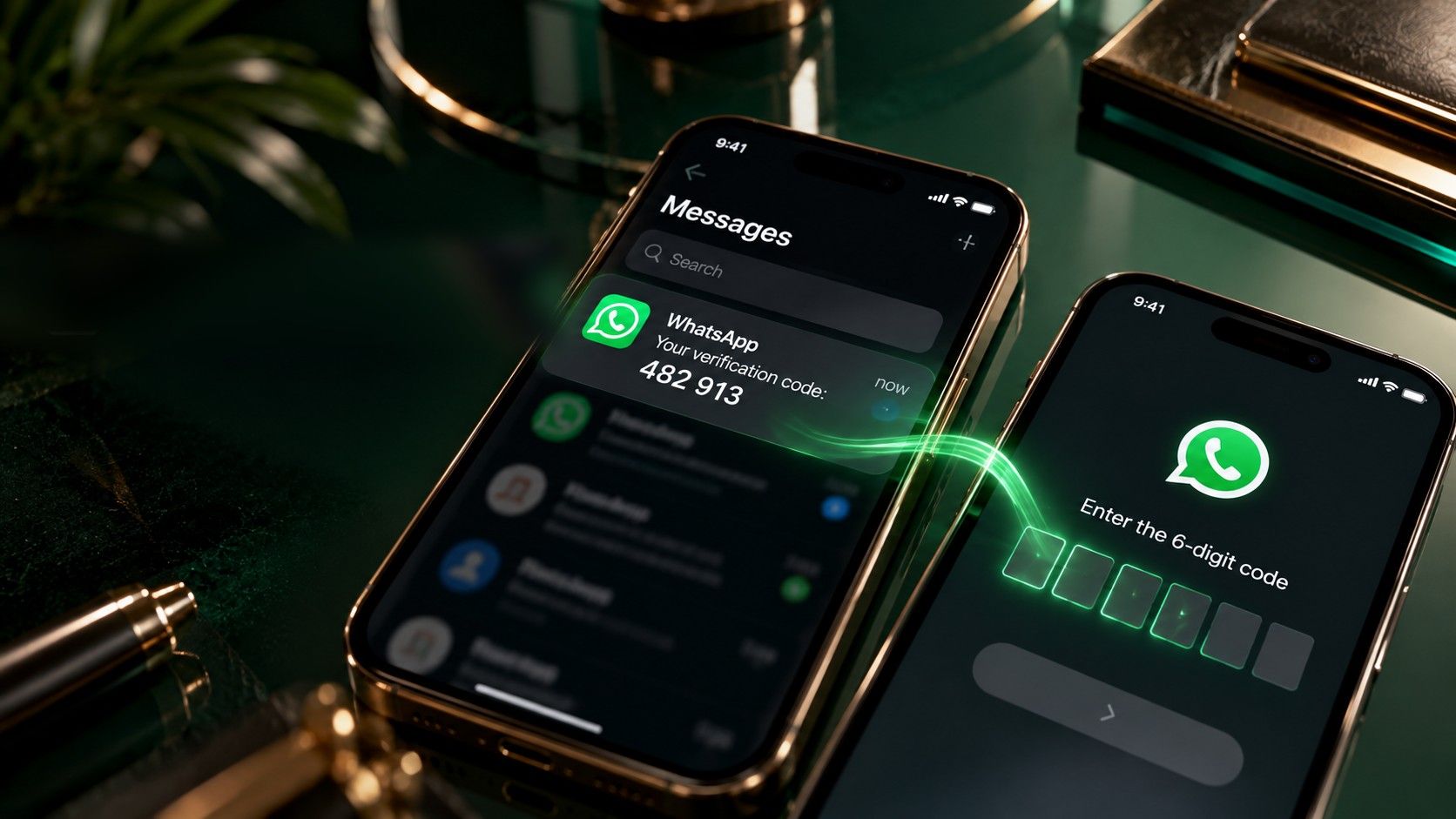
Yes, and on the same number. The TripoSIM US number receives the WhatsApp verification code, so you can register WhatsApp on it. TripoSIM tested WhatsApp on October 13, 2026 and WhatsApp Business on October 18, 2026. How to set up WhatsApp with a US number walks through the steps.
Then one +1 number does both jobs:
| Client wants to | What happens |
|---|---|
| Call you | It rings in the TripoSIM app over Wi-Fi or mobile data |
| Reach you when you are offline | Voicemail takes the message, up to 2 minutes |
| Chat or send files | WhatsApp on the same number |
| Get a call back | You call from the app, using your 300 outgoing minutes to the US and Canada |
Each number holds one WhatsApp account. If you want your personal WhatsApp and WhatsApp Business side by side, use two numbers. One person can have as many TripoSIM US numbers as they like, each with its own plan. Our guide to WhatsApp Business with a US number covers the business app.
What about texts?
This is the one thing to get right. The TripoSIM number receives texts from US and Canadian senders, and you will see them in the app. It cannot send texts.
WhatsApp messages are different. They travel inside WhatsApp, not as texts from the number, so a WhatsApp chat on your US number works both ways as usual.
So word your contact line carefully. “Call, WhatsApp or email” is accurate. “Call or text” is not, because a client who texts you will wait for a reply that cannot come from the number.
What does this look like in practice?
Take a hypothetical math tutor in Cairo with students’ parents in Texas and Illinois. Before, she only listed WhatsApp. Now her site says:
US line: +1 (her number). Call Monday to Thursday, 8 to 10 a.m. Central, or leave a voicemail and I’ll call back the same day. For lesson changes, WhatsApp me on this number or email [email protected].
In a month, parents call her 12 times for about 8 minutes each: 96 incoming minutes, inside the fair use of 300 minutes a month. She returns 10 voicemails with calls of about 5 minutes, using 50 of her 300 outgoing minutes. Schedule changes come in on WhatsApp. Nothing depends on texting.
This is a worked example, not a customer result.
How do you set up both?
- Get the number and pick an area code near most of your clients. The area code guide helps.
- Set up the TripoSIM app and allow notifications and the microphone. TripoSIM says calls ring even when the app is closed once notifications and the microphone are allowed; a phone that is off, offline or has notifications blocked does not ring, and callers reach voicemail.
- Record a greeting with your hours in a US time zone. Our voicemail greeting scripts give you wording.
- Register WhatsApp or WhatsApp Business on the number, then turn on two-step verification.
- Update everything at once: contact page, email signature, proposals and invoices, with “call, WhatsApp or email”.
- Keep the plan active. WhatsApp asks for a code to the same number when you move to a new phone, so a number you keep matters.
Bottom line
WhatsApp is a good channel, but on its own it asks US clients to come to you on your terms. A US number meets them where they already are: a number to dial, a voicemail to leave and a call back in their hours. Put WhatsApp on the same number and you have both. Just remember the number cannot send texts, so point written questions to WhatsApp or email. The WhatsApp number page has the details, and the plans page has both plans: $100 a year or $12.99 a month.